Digital Product Passports for Luxury Fashion: How Top Brands Are Using Digital Birth Certificates | Amalé
The Calloused Fingertips of the Marche Region
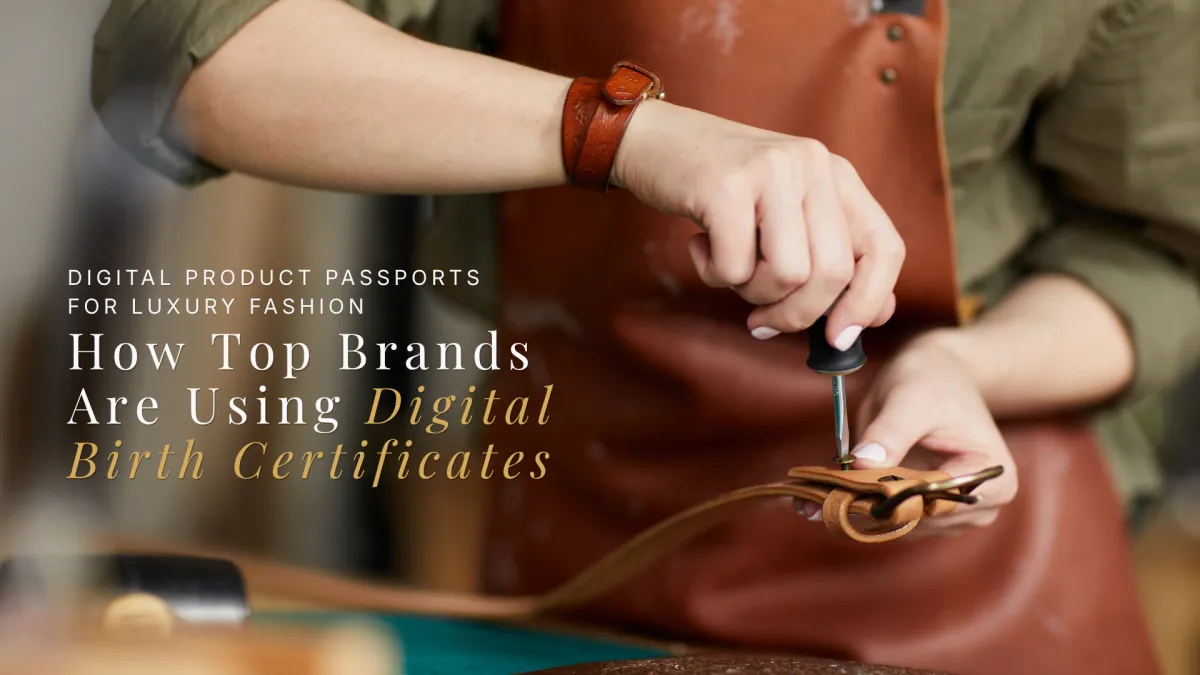
In the rolling hills of Italy’s Marche region, the air in the workshops carries a specific scent: a mixture of tanned calfskin, wax, and the metallic tang of precision tools. Here, the "Gommino" driving shoe isn’t merely manufactured; it is made with intent. An artisan spends years learning the exact tension required to hand-stitch the 133 rubber pebbles into the sole. Their fingertips are calloused, a physical record of a lifetime spent working with leather.
This is where the story of luxury begins, but for decades, this is also where the story became opaque. Once a pair of shoes left the workshop, the connection to the artisan’s hand was severed. The "signature" of the maker was lost to the wind of global retail.
Today, that silence is ending. Tod’s and LVMH are not just selling heritage; they are recording it. By leveraging the Aura Blockchain, these industry leaders are creating what we at Amalé Technologies call the "Birth Certificate of Luxury." Every Dior bag and every Tod’s loafer now carries a digital record: a Digital Product Passport (DPP) that preserves the provenance of the piece from the forest to the final stitch. It feels a bit like finding your grandmother’s handwritten note tucked inside an old coat pocket. The object is still beautiful on its own, but the record gives it a pulse.

From Hides to History: The Digital Product Passport as a Signature
The Digital Product Passport is often discussed in sterile, regulatory terms. However, through the lens of craftsmanship, it is the ultimate act of respect. When a consumer taps their phone against a luxury item, they aren’t just looking for a serial number. They are witnessing the architecture of longevity.
They see the origins of the leather, the environmental impact of the tannery, and the specific workshop where the item was born. This transparency serves a dual purpose. For the brand, it is a shield against counterfeiting and a bridge to the secondary market. For the planet, it is a radical departure from the "take make waste" cycle.
A garment or accessory designed to last 20, 30, or 50 years is the most effective circularity strategy in existence. When we give a product a digital identity, it stops being just another commodity and starts carrying a record that can follow it over time. That shift supports a culture of stewardship instead of a culture of disposal.
The Cosmic Connection
Everything is a cycle. The carbon in the leather, the water used in the dye, and the human energy spent in the stitch are all borrowed from the earth. When we lose track of an item’s history, we break that cycle. The DPP keeps the record intact, so less is forgotten and less is wasted.

The California Ripple Effect: Why Regulatory Architecture Matters Now
While the artisans in Italy focus on the stitch, the regulators in Sacramento are focusing on the system. California is currently leading the charge with SB 707, the Responsible Textile Recovery Act. It is the first of its kind in the United States, mandating that producers take responsibility for the entire lifecycle of their products.
California isn't just passing a law; it is setting a model. Washington and New York are already following suit, with Canada watching closely. This isn't a localized trend; it is a global shift in how we value materials. Anyone who has ever tried to keep a closet organized knows the feeling. Once pieces lose their history, they lose their place. Regulation is pushing the industry to build that memory back in.
The mandate is clear: brands must know what they are making, how it was made, and where it will go when the first owner is finished with it. This is where the beauty of luxury meets the rigor of compliance. The same data that Tod’s uses to tell a story of heritage is the data required by CalRecycle to prove textile responsibility.
Stewardship Over Ownership: The 20-Year Strategy
The "Architecture of Longevity" requires a shift in the corporate mindset. If a brand’s success is measured only by the volume of new items sold, circularity stays out of reach. But if success is measured by how long the product holds value, the entire model changes.
LVMH’s adoption of blockchain technology acknowledges that the value of a luxury item often increases over time. By providing a secure, immutable record of authenticity and repair history, they are supporting a resale ecosystem that values quality over novelty.
For the producer in a forest or a textile mill, this means their work is no longer invisible. The provenance of the fiber: whether it is regenerative cotton or responsibly sourced cellulose: is locked into the digital "Birth Certificate." The planet benefits when we stop treating clothes like paper towels and start treating them like the architectural feats they are.

The Circularity Engine™: Preserving the Artisan’s Signature
At Amalé Technologies, we recognize that most brands lack the infrastructure to bridge the gap between their creative vision and these new regulatory demands. Compliance shouldn't be a burden that slows the work; it should be the framework that protects it. Think of it like the hidden structure inside a well made jacket. You may never see it, but it is what lets the piece hold its shape over time.
Our Circularity Engine™ is built to be the secure, exclusive infrastructure for these digital identities. We don't offer a one-size-fits-all solution because every brand’s story is unique. Whether you are tracking a limited-run collection of upcycled textiles or managing the global footprint of a luxury house, the goal is the same: transparency that builds trust.
We provide the tooling that allows brands to meet the stringent requirements of SB 707 and the EU DPP without losing the human core of their communication. We make the data usable, clear, and ready for the real world.
The Path Forward
To navigate this transition, brands must move beyond the "why" and start building the "how." The next phase rests on three pillars:
Radical Traceability: Moving beyond Tier 1 suppliers to understand the human and environmental stakes at the source.
Digital Identity: Implementing DPPs that serve as both a regulatory tool and a consumer engagement platform.
Extended Producer Responsibility (EPR): Aligning with frameworks like SB 707 to ensure products are designed for durability and eventual recovery.
Luxury is often defined as the opposite of the ordinary. But as we move toward 2030, the most extraordinary thing a brand can do is take full responsibility for its existence.
The Loop Report is a publication of Amalé Technologies Inc. The information provided is for educational and strategic purposes and does not constitute legal advice. For specific SB 707 compliance strategies, consult with your legal counsel and the official Landbell/CalRecycle documentation.