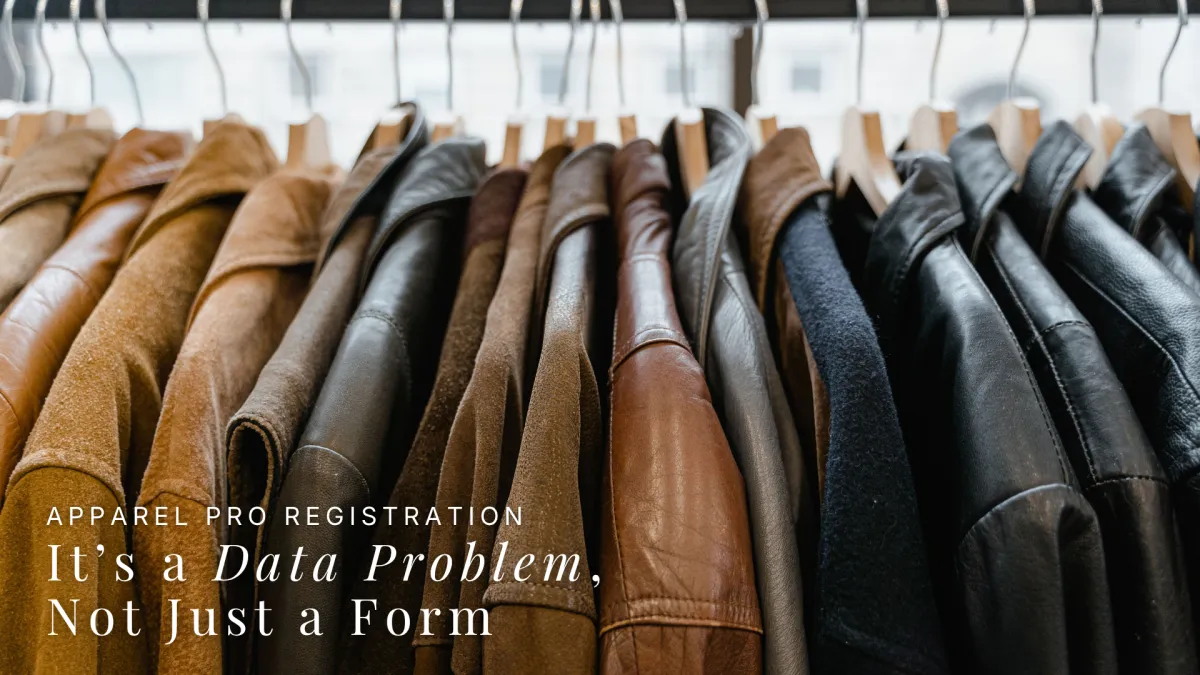
Apparel PRO Registration: It’s a Data Problem, Not Just a Form
California apparel brands are out of time for passive compliance. If you sell covered products into the state, you must register with a Producer Responsibility Organization (PRO) by July 1, 2026. Circularity has stopped being a talking point. It is now a data requirement.
A vintage silk slip from the 1940s tells the story clearly. It had no care label, no fiber composition tag, and no tracking number. It was a beautiful, anonymous artifact of a different era. But today, a garment without data is a garment without a future in the regulated market.
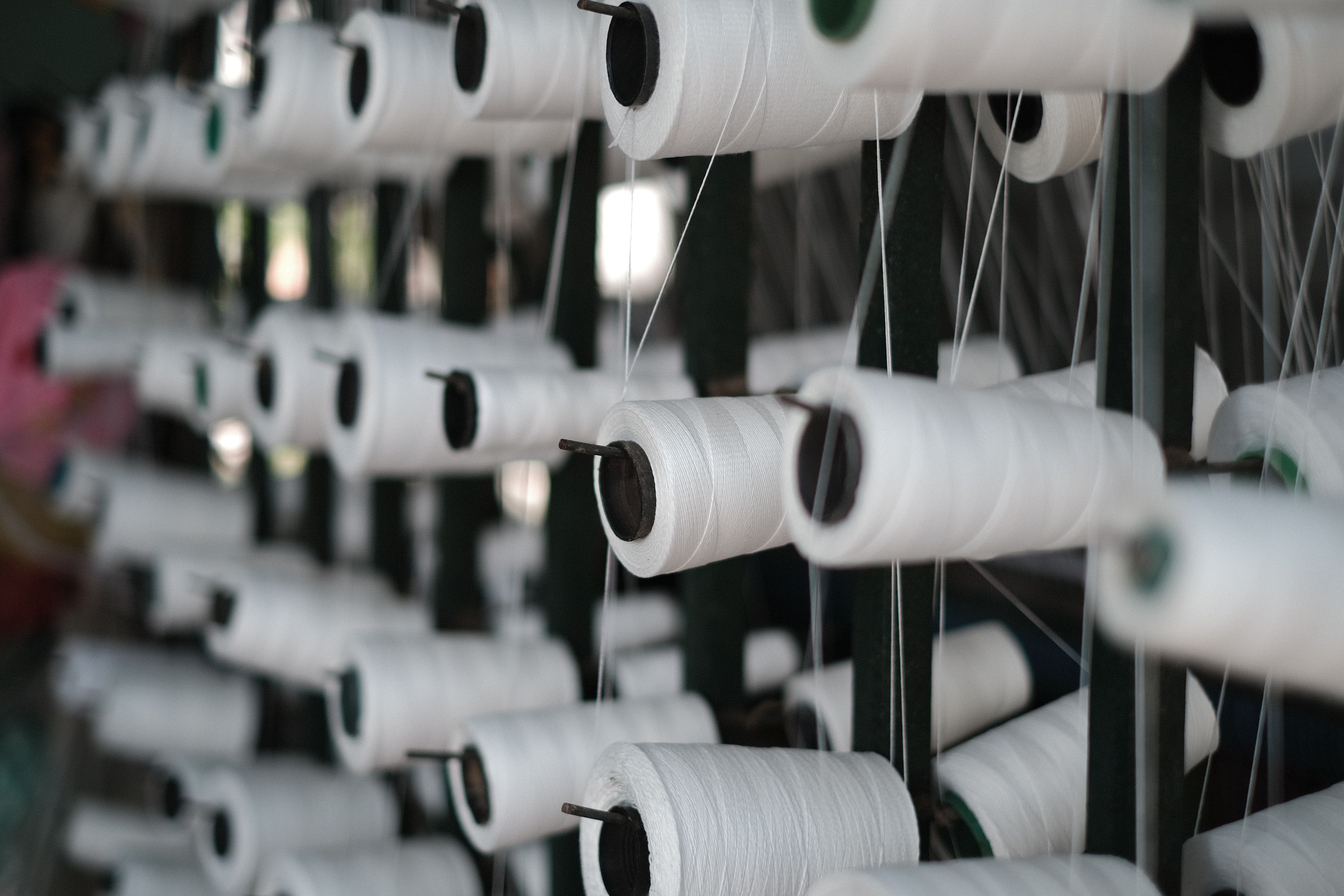
That single piece of clothing is now a data point in a much larger system. What starts with a single thread can end in a broader conversation about waste, recovery, and accountability.
The brands that handle this transition well will not treat SB 707 registration as a one-time filing. They will treat it as the start of a data system that must support reporting, financing, and program participation over time. At Amalé Technologies, we view this as the fundamental move toward compliance infrastructure.
The Reality of the July Deadline
The clock is moving toward July 1, 2026. By this date, producers of covered apparel and textile products must join Landbell USA, the PRO approved by CalRecycle to carry out California’s SB 707 textile EPR program. This is not just a policy milestone. It is the first operational test of whether a brand can organize the product, material, sales, and entity data needed to participate in the new compliance system.
Failure to register may create significant compliance risk, including potential administrative penalties. But beyond the threat of enforcement, the real challenge is operational. Registration is the front door. Once a company enters the PRO system, it is preparing for a recurring cycle of data submission that most current brand systems are simply not built to handle.
Why the PRO is an Execution Layer
Producer Responsibility Organizations are not just administrative intermediaries. Under the textile Extended Producer Responsibility (EPR) framework, the PRO becomes part of the execution layer for compliance. When a brand registers with Landbell USA, it is formalizing how it identifies covered products and validates its producer status.
This registration process requires you to declare your status and list every brand under your corporate umbrella that touches the California market. For many, this is the first time they have had to map their entire portfolio against a specific regulatory boundary. If your foundational data is weak, your downstream reporting burden will become expensive very quickly. Over time, PRO reporting and fee structures may depend on the quality and completeness of the data brands provide. If a brand cannot clearly support its product, material, and sales data, compliance becomes harder to manage and harder to defend.

The Fragility of Fragmented Data
Most companies approach compliance by looking for the right form to fill out. That is the easy part. The harder part is the underlying data architecture. For most fashion brands, product data is currently a chaotic web. Information is trapped in PLMs (Product Lifecycle Management), ERPs, sourcing spreadsheets, and e-commerce records.
Material composition might exist in a designer's notes but not in a format that a regulator can audit. Sales data might be tracked by channel, but not isolated by geography in a way that separates California units from the rest of the world. This fragmented data environment might survive normal business operations, but it will not survive a regulatory audit. Spreadsheets are not infrastructure. They are fragile, manual, and prone to human error. To meet the SB 707 mandate, you need a system that connects these silos into a single source of truth.
Mapping the Data Behind Registration
What does the PRO actually want to know? While the pre implementation phase involves a flat $1,000 fee, the long term reporting requirements are much more granular. You will eventually need to provide SKU level data that includes fiber composition, product weight, and sales volumes specific to the California market.
This requires a level of material transparency that most brands are only beginning to explore. You need to know exactly how much cotton, polyester, or elastane is in every garment. You need to be able to tag each product with its recyclability attributes. This is not just about what you sold; it is about what happens to the garment at the end of its life. The law expects you to be accountable for the entire lifecycle. This data is the bridge between a physical product and its digital record (the Digital Product Passport).
Infrastructure as a Competitive Advantage
There is a temptation to view this as a purely defensive move. But the brands that move first are finding that compliance infrastructure is actually a market advantage. By building a governed data model now, you are preparing your brand for a global wave of regulation.
The Digital Product Passport requirements emerging in the EU are built on the same logic as SB 707. If you solve the data problem for California today, you have already built the foundation for Paris, Berlin, and New York tomorrow. You are moving from a reactive state to a proactive one. Instead of scrambling every time a new law is passed, you have a permanent operating layer that handles the complexity for you. This is what the Amalé Circularity Engine™ is designed to do. It takes the burden of data management off your team and puts it into a system built for scale.
A Practical Registration Pathway
If you are currently staring at a mountain of spreadsheets and wondering where to start, you are not alone. The most effective approach is to sequence the work in layers. Do not try to solve everything at once.
First, confirm your producer status and identify which of your brands are in scope. Second, map your current data sources to see where the gaps are. Third, choose a compliance partner that can help you bridge those gaps without adding to your team's manual workload. Whether you need a simple Foundational Assessment or a full scale infrastructure build, the goal is the same: audit ready data that keeps you in the market and out of the penalty box.
The smart move now is to treat registration as an early systems test. If your organization can pass this test cleanly, you are doing more than just hitting a deadline. You are building the operating discipline that the future of fashion requires.
Work With Us
If your team is still running this process through spreadsheets, email threads, and crossed fingers, that is your sign. The form is not the hard part. The operating model is.
Choose the service path that fits the work in front of you:
Concierge PRO Registration ($500 Flat Fee) for direct support with SB 707 PRO registration.
Compliance Readiness Assessment (Starting at $2,500) to identify data gaps, assess risk, and build a practical roadmap for reporting readiness.
Amalé Circularity Engine™ for brands ready to scale product data, supplier records, traceability, and reporting workflows inside one compliance infrastructure.
Not sure what you need? Book a complimentary call with us to find your path forward.
The Loop Report is a publication of Amalé Technologies Inc. The information provided is for educational and strategic purposes and does not constitute legal advice. For specific SB 707 compliance strategies, consult with your legal counsel and the official Landbell/CalRecycle documentation.